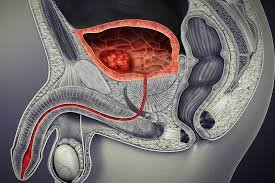
1. What is Urinary Bladder Cancer?
Urinary bladder cancer occurs when abnormal cells in the bladder begin to grow uncontrollably, forming a tumor. The bladder is a hollow organ in the lower abdomen that stores urine before it is expelled from the body. Bladder cancer can develop in any part of the bladder, including the inner lining (urothelium), muscle layer, or surrounding tissue.
2. Types of Urinary Bladder Cancer
Bladder cancer is primarily classified into several types based on the cell type and how the cancer behaves:
Urothelial Carcinoma (Transitional Cell Carcinoma): The most common type, originating from the urothelial cells that line the bladder. It can be classified further into:
- Papillary Urothelial Carcinoma: Grows in a finger-like projection and tends to be less aggressive.
- Flat Urothelial Carcinoma: Spreads more evenly across the bladder lining and can be more aggressive.
Squamous Cell Carcinoma: Often associated with chronic irritation or infection, this type arises from the squamous cells that cover the bladder lining. It is less common in Western countries but more prevalent in parts of the world where schistosomiasis is endemic.
Adenocarcinoma: A rare form that begins in the glandular cells in the bladder lining. It can be more aggressive and may have a worse prognosis compared to other types.
Small Cell Carcinoma: A rare and aggressive type of bladder cancer that tends to grow quickly and is often diagnosed at an advanced stage.
3. Symptoms of Urinary Bladder Cancer
Symptoms can vary depending on the stage and location of the cancer but commonly include:
- Hematuria: Blood in the urine, which may be visible (gross hematuria) or detected only through microscopic examination.
- Frequent Urination: An increased need to urinate, often with little output.
- Urgency: A persistent feeling of needing to urinate urgently.
- Painful Urination: Discomfort or pain during urination.
- Lower Abdominal Pain: Pain or discomfort in the lower abdomen or pelvis.
- Unexplained Weight Loss: Significant loss of weight without a known cause.
- Fatigue: Persistent tiredness or weakness.
4. Diagnosis of Urinary Bladder Cancer
The diagnostic process typically includes:
Medical History and Physical Exam: Evaluation of symptoms and physical examination, including checking for any abnormalities in the abdomen and pelvic area.
Urinalysis: Testing of a urine sample to detect blood or abnormal cells.
Cystoscopy: A procedure where a thin, flexible tube with a camera (cystoscope) is inserted through the urethra to visualize the bladder’s interior and obtain tissue samples (biopsy) for examination.
Imaging Tests: CT scans, MRI, or ultrasound to assess the bladder and surrounding structures for tumors and determine the extent of the disease.
Biopsy: Removal of a small tissue sample from the bladder to confirm the presence of cancer cells and determine the type and grade of cancer.
5. Treatment Options for Urinary Bladder Cancer
Treatment for bladder cancer depends on the type, stage, and individual patient factors. Common treatments include:
Surgery:
- Transurethral Resection of Bladder Tumor (TURBT): A procedure to remove tumors from the bladder through the urethra. It is often used for superficial cancers.
- Cystectomy: Partial or total removal of the bladder, depending on the extent of the cancer. A partial cystectomy removes part of the bladder, while a radical cystectomy removes the entire bladder and nearby tissues.
Chemotherapy: Uses drugs to kill or inhibit the growth of cancer cells. It can be administered before surgery (neoadjuvant therapy) to shrink tumors or after surgery (adjuvant therapy) to eliminate remaining cancer cells. It may also be used as a primary treatment for advanced cancer.
Immunotherapy: Uses medications to stimulate the immune system to recognize and attack cancer cells. Bacillus Calmette-Guerin (BCG) therapy is a common immunotherapy used for superficial bladder cancer.
Radiation Therapy: Uses high-energy rays to kill cancer cells, often used when surgery is not an option or to treat cancer that has spread to nearby tissues.
Targeted Therapy: Focuses on specific molecules involved in cancer growth. It is used for certain types of bladder cancer with specific genetic markers or mutations.
6. Support and Coping
Managing bladder cancer involves addressing both physical and emotional aspects:
Medical Team: Collaborate with oncologists, urologists, radiologists, and other specialists to develop and follow a treatment plan tailored to your needs.
Support Groups: Connect with others affected by bladder cancer for emotional support, advice, and shared experiences.
Counseling and Therapy: Professional counseling can help with managing the emotional and psychological impact of cancer and its treatment.
Lifestyle Adjustments: Maintain a healthy diet, exercise as recommended by your healthcare provider, and engage in activities that support overall well-being.
7. Research and Advances
Ongoing research continues to improve the understanding and treatment of bladder cancer. Clinical trials provide opportunities for accessing new therapies and contributing to advancements in care. Staying informed about the latest developments can offer hope and new treatment options.
8. Conclusion
Urinary bladder cancer is a complex disease with various types and treatment options. Early detection, personalized treatment plans, and a strong support system are key to effectively managing the condition. If you or someone you know is facing bladder cancer, work closely with healthcare professionals to navigate the journey and explore available resources for support and care.